


SisoPMA – Integrated IVF and Reproductive Medicine Information System
Origin language: English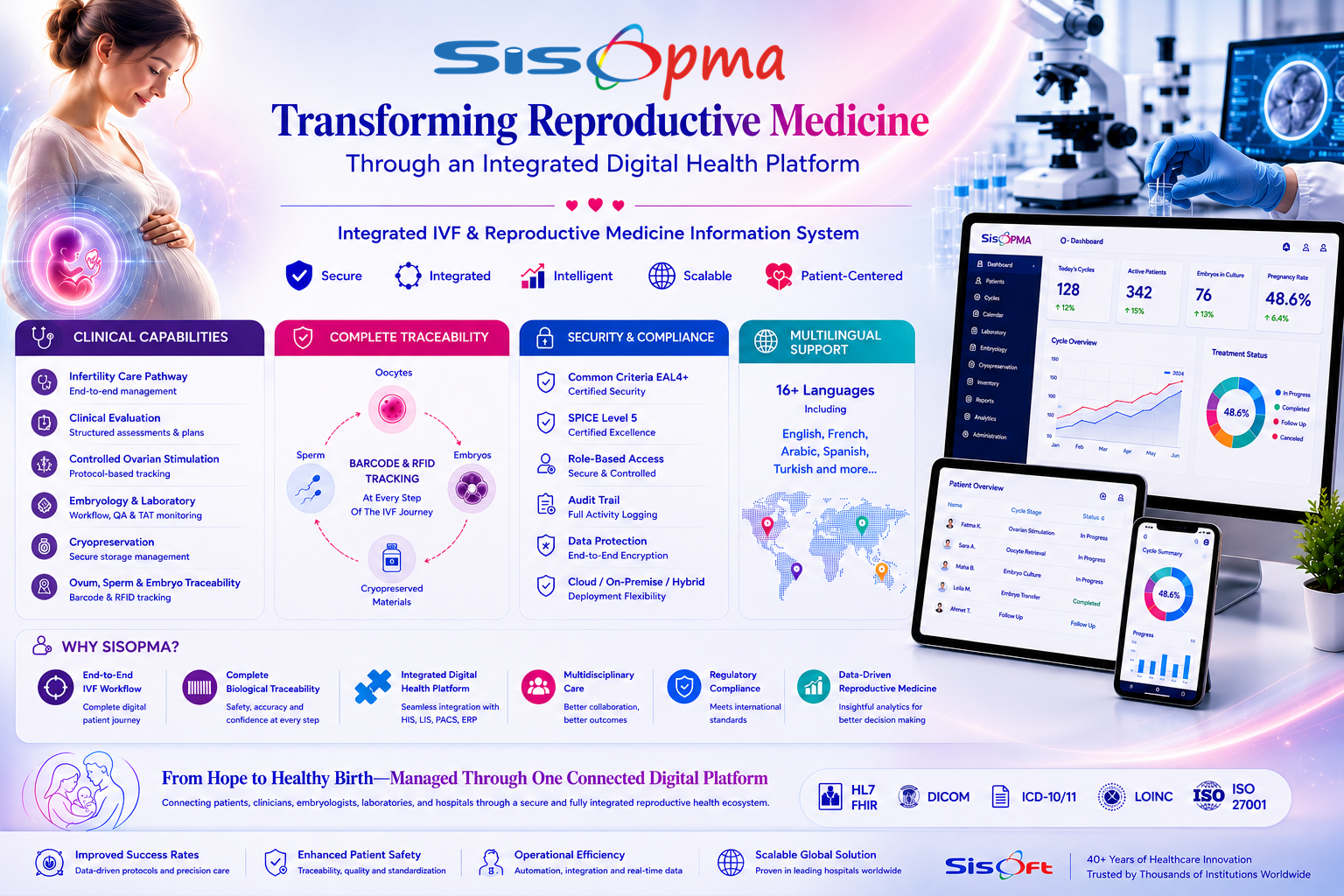
SisoPMA is an integrated digital platform designed to transform infertility and assisted reproductive care by managing the complete IVF journey within a single interoperable healthcare ecosystem. First implemented at the Algerian Military Mother and Child Hospital as part of the Sisoft Integrated Digital Health Platform, the solution supports every stage of reproductive medicine—from initial consultation and infertility assessment to ovarian stimulation, embryology, cryopreservation, embryo transfer, pregnancy follow-up, and outcome evaluation.
By integrating clinical workflows, laboratory operations, electronic medical records, pharmacy, and hospital information systems, SisoPMA creates a unified digital environment for reproductive medicine. The platform improves patient safety, reduces manual documentation, strengthens multidisciplinary collaboration, and provides healthcare professionals with timely access to accurate clinical information.
Advanced barcode and RFID technologies ensure complete traceability of sperm, oocytes, embryos, and cryopreserved materials, supporting regulatory compliance and laboratory quality. Supporting Arabic, French, and English—including full right-to-left functionality—the platform offers a secure, scalable architecture suitable for maternity hospitals, university hospitals, research institutions, and specialized fertility centers worldwide.
The implementation of an integrated IVF and Reproductive Medicine Information System required the harmonization of highly specialized clinical workflows involving physicians, embryologists, laboratory personnel, nurses, and administrative teams. One of the primary challenges was replacing paper-based and fragmented processes with standardized digital workflows while ensuring uninterrupted patient care throughout the transition.
Another significant challenge was the integration of laboratory devices, existing Hospital Information Systems (HIS), and supporting clinical applications into a single interoperable platform. Ensuring complete traceability of reproductive materials through barcode-based identification, while maintaining data accuracy and patient safety, required close collaboration between clinical and technical teams.
The project also had to address multilingual clinical environments, strict information security and privacy requirements, and evolving national healthcare regulations. Continuous adaptation to changing clinical practices, quality standards, and operational requirements was essential to ensure long-term sustainability, interoperability, and user adoption across all participating departments.
Successful implementation was driven by the active involvement of clinicians, embryologists, laboratory specialists, hospital administrators, and IT teams from the earliest stages of the project. Continuous stakeholder engagement, iterative workflow validation, and comprehensive user training significantly increased user adoption while minimizing disruption to clinical services.
Another key success factor was the use of a fully integrated digital health platform rather than standalone departmental applications. Integrating IVF workflows with the Hospital Information System, laboratory services, electronic medical records, and barcode-based traceability improved patient safety, operational efficiency, and data consistency while reducing manual processes and duplication.
From a scalability perspective, designing the solution around internationally recognized interoperability standards, configurable clinical workflows, multilingual capabilities, and modular architecture enabled adaptation to different healthcare environments without requiring major software redesign. This approach supports long-term sustainability, facilitates compliance with evolving regulatory requirements, and provides a strong foundation for future innovations, including advanced clinical decision support and AI-enabled reproductive medicine.

