


BabyChecker
Origin language: English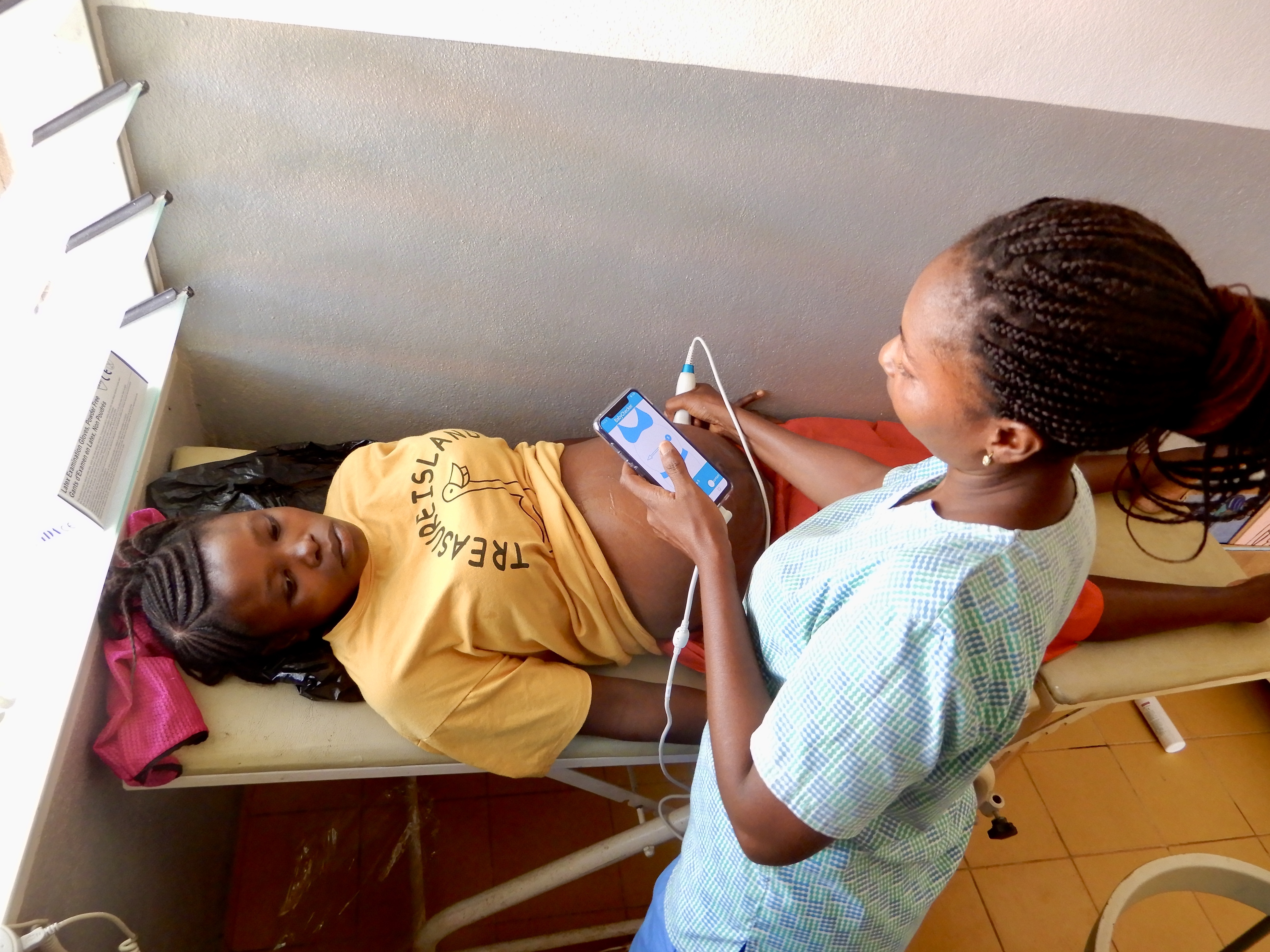
Country
Kenya
Ghana
Guatemala
Sierra Leone
Malawi
Zambia
Honduras
Ethiopia
Tanzania
Pakistan
Coverage
International
Nb of implementation sites
50
Lead organization
Implementation partners
Health Focus Area
Climate resilience
Maternal and child health
Primary Health Care
Sexual and Reproductive Health
Services
Diagnostics
Enabling technologies
Artificial Intelligence
Standards
N/A
Tools
N/A
Funding sources
Private funds
Donors
Business model
Subscription
Funders
Summary
BabyChecker is an AI tool designed to analyze obstetric ultrasound scans and assess pregnancy risks. It allows frontline healthcare workers to conduct scans using a handheld ultrasound device in just 2 minutes, even without prior ultrasound experience, after watching a brief 3-minute training video. Guided by a mobile application, users perform standard sweeps across the abdomen for analysis. The AI processes the scan to deliver key outputs such as gestational age, fetal presentation, and placenta localization, all without needing Internet access. The app also provides results for multiple gestations and a 2D fetal image post-analysis. BabyChecker aims to enhance maternal and antenatal care by assisting healthcare workers in identifying potential risks, especially in resource-constrained environments, facilitating timely referrals. Its health focus includes Sexual and Reproductive Health, Maternal and Child Health, Climate Resilience, and Primary Health Care, targeting pregnant women, health professionals, and newborns in both rural and urban settings.
Keywords
Pregnant mothers
Artificial intelligence
Antenatal care
Maternal health
Pregnancy
Publications
Insights - Lessons learnt
Challenges
N/A
Recommendations
BabyChecker is designed for resource efficiency. It can be used by any frontline healthcare worker without prior knowledge of ultrasound. It can function offline and without a constant power supply. Implementation of Artificial Intelligence (AI) in healthtech solutions are widely emphasized and this is where BabyChecker is introduced, which uses AI to interpret risky pregnancies. In January 2025, Kenya Ministry of Health released the National Guidelines for Obstetric Point of Care Ultrasound (O-POCUS) which recommended the use of POCUS devices at different level of healthcare. The guideline also highlights the integration of AI technology to O-POCUS devices. This recommendation will positively influence the implementation of BabyChecker to its beneficiaries. BabyChecker is well regarded for its scalability and sustainability. BabyChecker is a simple solution designed for resource limited setting and can be used with minimum operational requirements. We ensure scalability of BabyChecker to other context and region through our simple training. Any frontline healthcare worker or non-clinician without any prior experience in ultrasound, can use BabyChecker after watching the 3-minute training video. In the past years of piloting BabyChecker, we have assessed usability based on various versions of training videos, and not through in-person training programs. The training video is provided in multiple languages – currently in English and Spanish – and can be expanded to specific requirements from regions. The literacy rate and technological knowledge of our target users, midwives, is limited and should be sufficient to use BabyChecker since it was designed for resource constrained settings where target users are often not even familiar with smartphones.
Recommendations
Projects using similar services
Projects focusing on similar topics
Projects with similar insights
iDHA (Project ID)
jzlu2e
Project links
https://indd.adobe.com/view/47454519-47cb-4c88-8092-be916c66c08bOrigin of information
Website
Data source link
https://delft.care/babychecker-2/Added to the platform on
2025-03-19
Project editors
Last update by
Mirana Michelle on 2025-03-20
Number of views
398
WHO classifications

