


ComBaCaL (Community-Based chronic Care Lesotho)
Origin language: English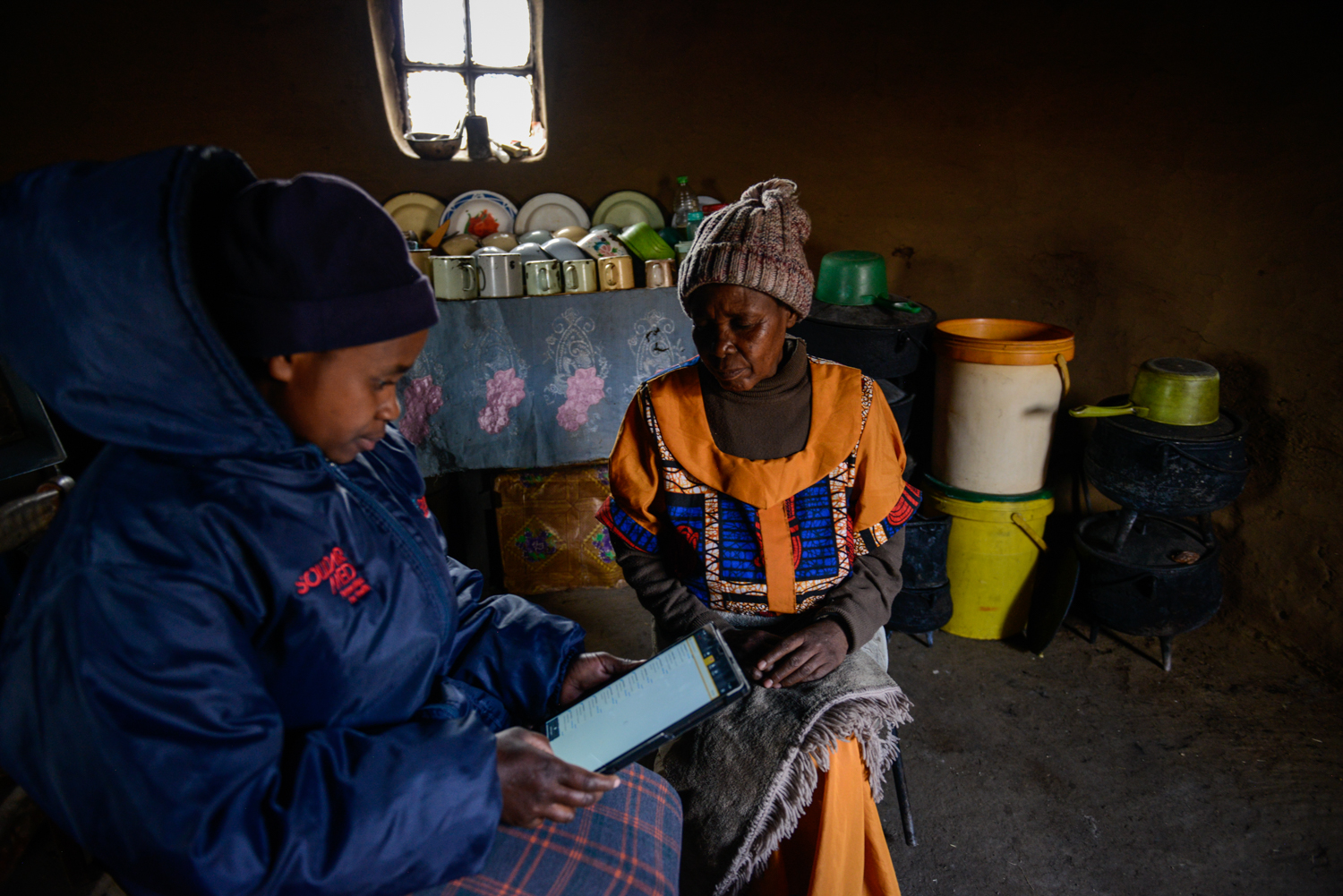
Country
Lesotho
Coverage
Regional
Nb of implementation sites
2
Lead organization
Implementation partners
N/A
Health Focus Area
Primary Health Care
Non-communicable diseases (NCDs)
Services
Decision Support
Enabling technologies
N/A
Standards
N/A
Tools
N/A
Funding sources
Research grants
Government funds
Private funds
Donors
Business model
No business model
Funders
Summary
ComBaCaL is an implementation-research platform designed to evaluate innovative digitally-supported interventions for managing chronic diseases through Community Health Workers (CHWs). A total of 113 CHWs utilize a tablet-based application, known as the ComBaCaL app, to collect population-based health data and deliver services in their villages. The app features modules that empower CHWs to independently conduct screening, diagnosis, and treatment for hypertension and diabetes. The project includes multiple clinical trials to assess the effectiveness of these interventions. Its aim is to create a scalable solution for CHW-led care of diabetes and hypertension, focusing on primary health care and non-communicable diseases (NCDs). The target population includes adults aged 18 and older, particularly the elderly (65+), those in rural areas, and the general population.
Keywords
Mobile application
Community health workers
Clinical Decision Support Systems CDSS CoP
Academic and research
Publications
Algorithmic Management for Community Health Worker in Sub-Saharan Africa: Curse or Blessing?Community-based management of arterial hypertension and cardiovascular risk factors by lay village health workers for people with controlled and uncontrolled blood pressure in rural Lesotho: joint protocol for two cluster-randomized trials within the ComBaCaL cohort study (ComBaCaL aHT Twic 1 and ComBaCaL aHT TwiC 2)eConsent administered by Community Health Workers in a study using the Trials within Cohorts (TwiCs) design—Experiences from the Community-Based chronic Care Lesotho (ComBaCaL) projectCommunity-based type 2 diabetes care by lay village health workers in rural Lesotho: protocol for a cluster-randomized trial within the ComBaCaL cohort study (ComBaCaL T2D TwiC)Cohort profile: design, sociodemographic characteristics, chronic disease risk factors, and baseline hypertension and diabetes care cascades of the open, prospective Community-Based chronic disease Care Lesotho (ComBaCaL) cohortEmpowering Community Health Workers With Scripted Medicine: Design Science Research StudyInsights - Lessons learnt
Challenges
A key resistance to change encountered was the scepticism towards independent prescription of medication by Community Health Workers. From a technical perspective, providing accurate decision support for the longitudinal follow-up for patients with hypertension and diabetes were main challenges.
Recommendations
We recommend early involvement of government stakeholders and healthcare workers to addess resistances to change. From a technical perspective, we can recommend the use of the Community Health Toolkit platform as an open-source tool designed for Community Health Workers that allows flexible customization of workflows and offers offline-first-functionalities. Decision support for chronic diseases requires the integration of previously collected data during each patient encounter and flexible workflows that allow to adapt to the unpredictable care pathways of patients over time.
Recommendations
Projects using similar services
Projects focusing on similar topics
Projects with similar insights
iDHA (Project ID)
k8b82f
Project links
www.combacal.orgOrigin of information
Project stakeholder
Data source link
N/AAdded to the platform on
2025-03-14
Project editors
Last update by
Mirana Michelle on 2025-03-14
Number of views
492
WHO classifications

