


Transforming Critical Care Through an Integrated ICU Information System
Origin language: English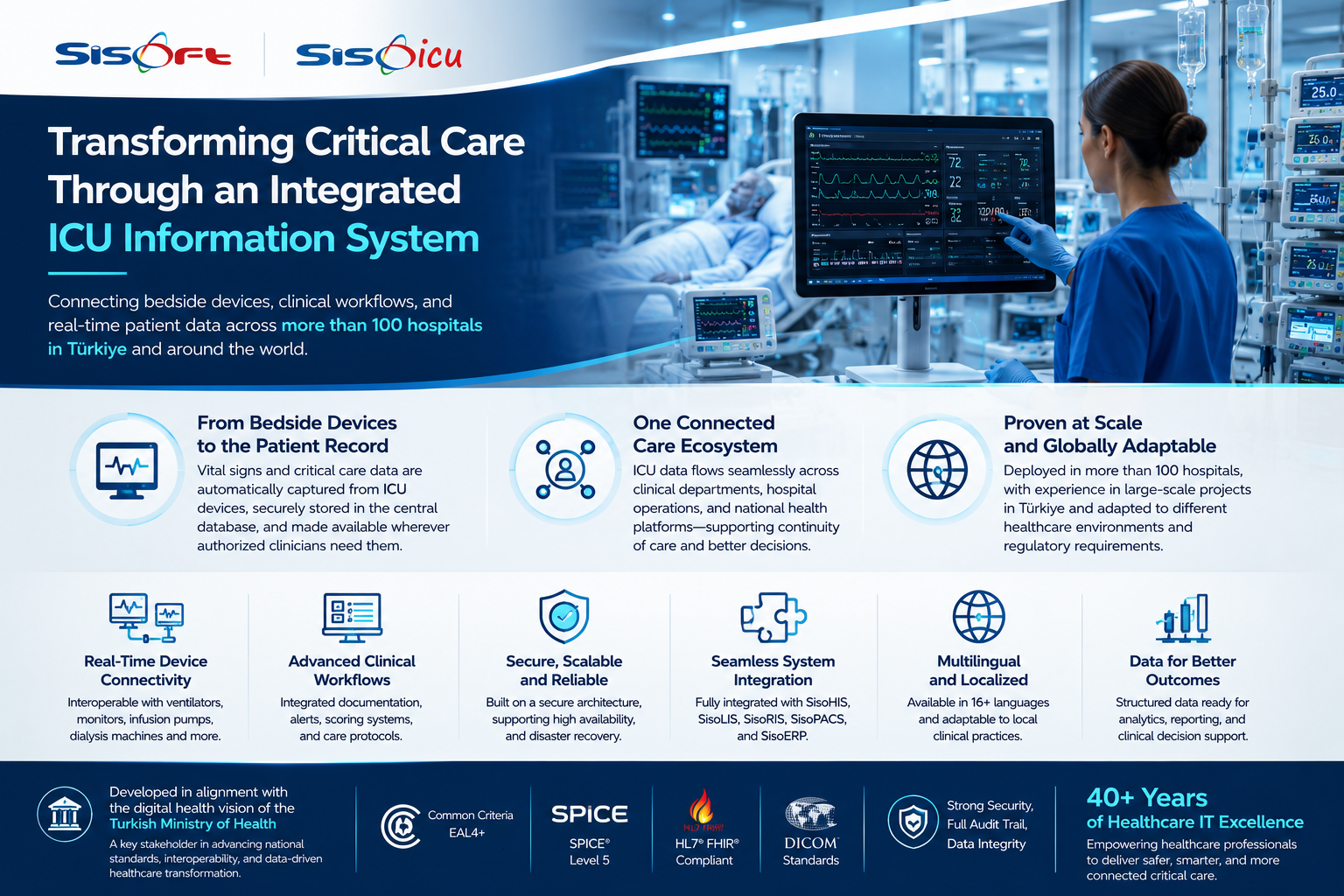
The project transformed intensive care delivery by implementing an integrated ICU Information System across more than 100 hospitals. The solution enables real-time integration of bedside medical devices, automatic capture of clinical data, centralized electronic patient records, and seamless interoperability with hospital information systems. Developed in alignment with national digital health initiatives and adapted for international healthcare environments, the platform supports safer clinical decisions, improves patient safety, reduces manual documentation, and strengthens continuity of care in critical care settings.
Implementing an integrated ICU Information System across multiple hospitals required significant organizational and technical coordination. One of the primary challenges was supporting healthcare professionals in transitioning from paper-based or partially digital workflows to a fully integrated digital intensive care environment. This required comprehensive training, continuous user engagement, and effective change management to ensure successful adoption.
From a technical perspective, integrating bedside medical devices from different manufacturers into a single platform while maintaining interoperability with the Hospital Information System (HIS), laboratory, radiology, pharmacy, and other clinical systems was a major challenge. Ensuring uninterrupted clinical operations during implementation and migration was critical, as intensive care units operate continuously and cannot tolerate system downtime.
Another important challenge was adapting the platform to evolving national digital health regulations, interoperability standards, cybersecurity requirements, and changing clinical practices. Continuous product enhancement and close collaboration with healthcare professionals enabled the system to remain compliant while meeting the needs of both clinicians and healthcare organizations.
Despite these challenges, strong cooperation between Sisoft's implementation teams, healthcare professionals, hospital management, and technical stakeholders resulted in a sustainable, scalable, and fully integrated ICU digital solution that continues to support high-quality critical care delivery.
One of the most important lessons learned was that successful digital transformation in intensive care requires much more than technology. Early engagement of clinicians, nurses, hospital management, and IT teams throughout the planning and implementation process significantly improved user acceptance and long-term adoption.
A second best practice was adopting a fully integrated platform approach rather than implementing standalone ICU applications. Seamless integration with the Hospital Information System (HIS), Laboratory Information System (LIS), Radiology Information System (RIS), Pharmacy, Electronic Medical Records (EMR), and bedside medical devices created a single source of truth, improved clinical workflows, reduced duplicate data entry, and enhanced patient safety.
Standardization based on international interoperability standards, including HL7, FHIR, DICOM, and internationally recognized clinical terminologies, ensured that the solution remained scalable, interoperable, and adaptable to different healthcare environments. Continuous compliance with evolving national digital health policies and cybersecurity requirements further strengthened the sustainability of the platform.
Finally, designing the solution as part of an Integrated Digital Health Platform, rather than as an isolated ICU system, proved essential for long-term success. This approach enables healthcare organizations to expand digital capabilities over time, supports national digital health strategies, facilitates data-driven decision-making, and provides a sustainable foundation for future innovations, including AI-powered clinical decision support and population health management.

