


Digital Disease Surveillance (DDS)
Origin language: English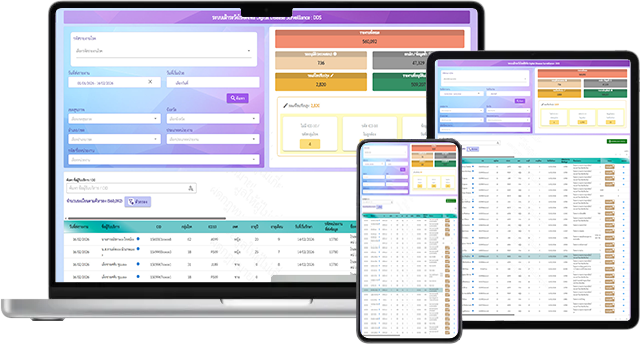
The Digital Disease Surveillance (DDS) system, created by the Thai Ministry of Public Health's Department of Disease Control, represents a significant advancement in national health informatics. This system modernizes traditional reporting methods by employing an API-driven architecture, yielding substantial benefits:
- Data Quality: It enhances data integrity, achieving an impressive 99.99% completeness for patient identification numbers and 100% for diagnostic codes, far exceeding legacy systems.
- Real-Time Integration: The DDS moves from delayed reporting to automated data pipelines, allowing immediate detection of outbreaks through the integration of multi-source health data.
- Advanced Analytics and Visualization: Built-in business intelligence tools provide public health officials with actionable insights and detailed tracking of disease distribution via interactive dashboards.
- Enhanced Early Warnings: Automated validation algorithms and instant notifications help authorities quickly address localized health threats before they escalate. Overall, the DDS system strengthens Thailand's health security infrastructure, fostering proactive, data-driven policymaking to ensure the safety of the general population. It aims for early, rapid, and accurate disease detection to support public health responses effectively.
The key challenges can be broken down into the following core areas:
- Data Integration and Interoperability: Bridging legacy health information systems across diverse healthcare settings (from rural sub-district health promoting hospitals to major regional hospitals) to feed seamlessly into the DDS platform remains complex.
- Data Quality and Timeliness: Ensuring that frontline healthcare personnel consistently input accurate, complete, and prompt epidemiological reports (such as Report 506 data) without creating excessive administrative fatigue is a persistent operational barrier.
- Resource and Infrastructure Constraints: Limited IT infrastructure, varying levels of digital literacy among local health workers, and constraints on sustained funding hinder uniform deployment and real-time responsiveness.
- System Governance and Decentralization Dynamics: Aligning data governance frameworks, data privacy policies (like Personal Data Protection Act compliance), and shifting health administrative structures—such as the transfer of primary care units to local government organizations—complicates unified data-sharing protocols.
Key Best Practices for DDS Implementation
- Automated API-Driven Integration over Manual Entry:
- Best-practice architectures prioritize direct, real-time API connections between local Hospital Information Systems (HIS) and the central DDS portal (or D506 portals). Minimizing manual transcription by utilizing automated Extract-Transform-Load (ETL) pipelines (such as Apache Airflow architectures) significantly reduces staff burnout, data lags, and human error.
- Robust Data Governance and Security Standards:
- Implementing strict Data Governance frameworks alongside clear compliance procedures for the Personal Data Protection Act (PDPA) and cybersecurity standards ensures that patient confidentiality is maintained without stifling rapid epidemiological data flows.
- Design Thinking and User-Centric Interface Design:
- Involving frontline users—such as Infection Control Nurses (ICNs), epidemiologists, and local health officers—in the design phase ensures dashboards and reporting modules remain intuitive. High usability directly correlates with improved data completeness and faster local response times.
- Multisource Triangulation (Syndromic + Event-Based + Indicator-Based):
- Moving beyond traditional indicator-based reporting by combining structured lab results with syndromic surveillance and event-based media monitoring creates a multi-layered early warning safety net.
- Continuous Feedback Loops and Validation Protocols:
- Establishing automated validation algorithms coupled with regular localized performance audits (e.g., measuring positive predictive value, sensitivity, and timeliness across public and private hospital networks) ensures accountability and maintains high data quality over time.

