


Shukhee: Digital Primary Healthcare Platform for Last-Mile Communities
Origin language: English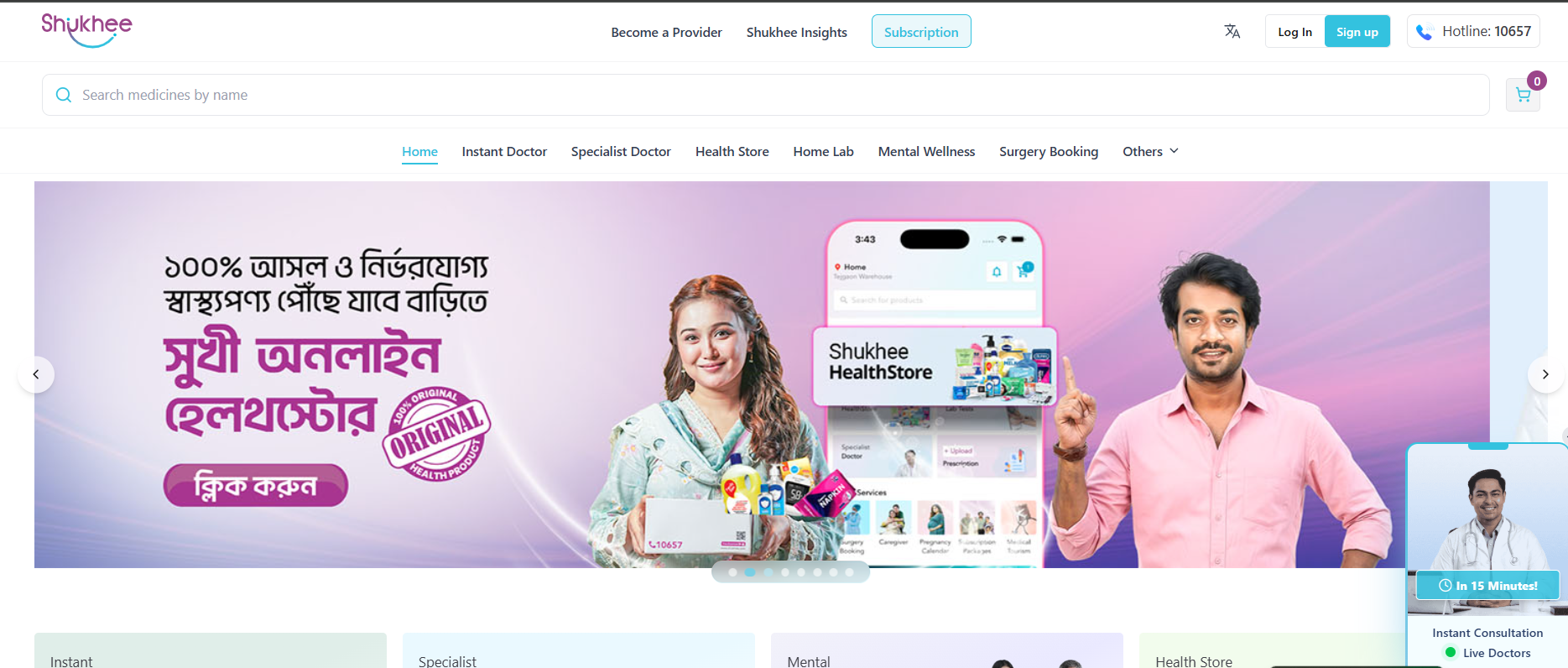
Shukhee is a comprehensive digital health initiative by Grameen HealthTech Limited, designed to transform primary healthcare delivery in Bangladesh through an integrated, technology-driven model. The project addresses critical gaps in access, affordability, and quality of care—particularly for rural and underserved populations—by combining telemedicine, community-based Shukhee Seba Kendras, e-pharmacy, diagnostics, and digital health records into a unified platform.
At the community level, trained local agents facilitate access to healthcare services, enabling real-time consultations, early diagnosis, and continuity of care while reducing travel time and costs. Beyond direct service delivery, Shukhee also strengthens the healthcare ecosystem by providing digital solutions such as hospital management systems, automation tools, and interoperable health platforms for healthcare providers.
By integrating physical service points with digital infrastructure, Shukhee creates a scalable, inclusive, and data-driven healthcare model that improves health outcomes, enhances service efficiency, and supports long-term health system strengthening. The initiative aligns with national priorities and contributes to advancing universal health coverage in Bangladesh.
Implementing a digital health model in rural Bangladesh presents multiple challenges across technical, operational, and behavioral dimensions. Limited internet connectivity and power disruptions in remote areas affect the consistency of telemedicine services. At the community level, low digital literacy and initial resistance to adopting technology-based healthcare require continuous awareness and trust-building efforts. Ensuring the availability and retention of trained local agents also remains critical for maintaining service quality and continuity.
From a systems perspective, integrating digital platforms with existing healthcare infrastructure and ensuring interoperability across providers can be complex. Additionally, maintaining affordability while scaling services, managing logistics for e-pharmacy and diagnostics, and navigating regulatory and compliance requirements pose ongoing challenges. Addressing these factors requires adaptive implementation strategies, strong coordination, and continuous system improvement.
A key success factor of Shukhee is its hybrid service delivery model that integrates digital technology with community-based human support. The deployment of trained local agents has been critical for building trust, increasing service uptake, and ensuring effective last-mile healthcare delivery—particularly in low-resource and hard-to-reach settings. Continuous community engagement and targeted awareness initiatives have played a vital role in overcoming behavioral barriers and strengthening health-seeking practices.
From a technical perspective, adopting a modular and interoperable system architecture has enabled seamless integration with diverse healthcare providers while ensuring flexibility and scalability. The combination of real-time telemedicine with structured follow-up mechanisms supports continuity of care and improves patient outcomes.
Strong stakeholder coordination, including partnerships with healthcare providers and alignment with national health priorities, has facilitated smoother implementation and long-term sustainability. Maintaining affordability through optimized service models, alongside the use of real-time data for monitoring and decision-making, has enhanced operational efficiency. Regular feedback loops and iterative system improvements have been essential in refining service delivery and supporting scalable expansion.

