


My Doctor
Origin language: English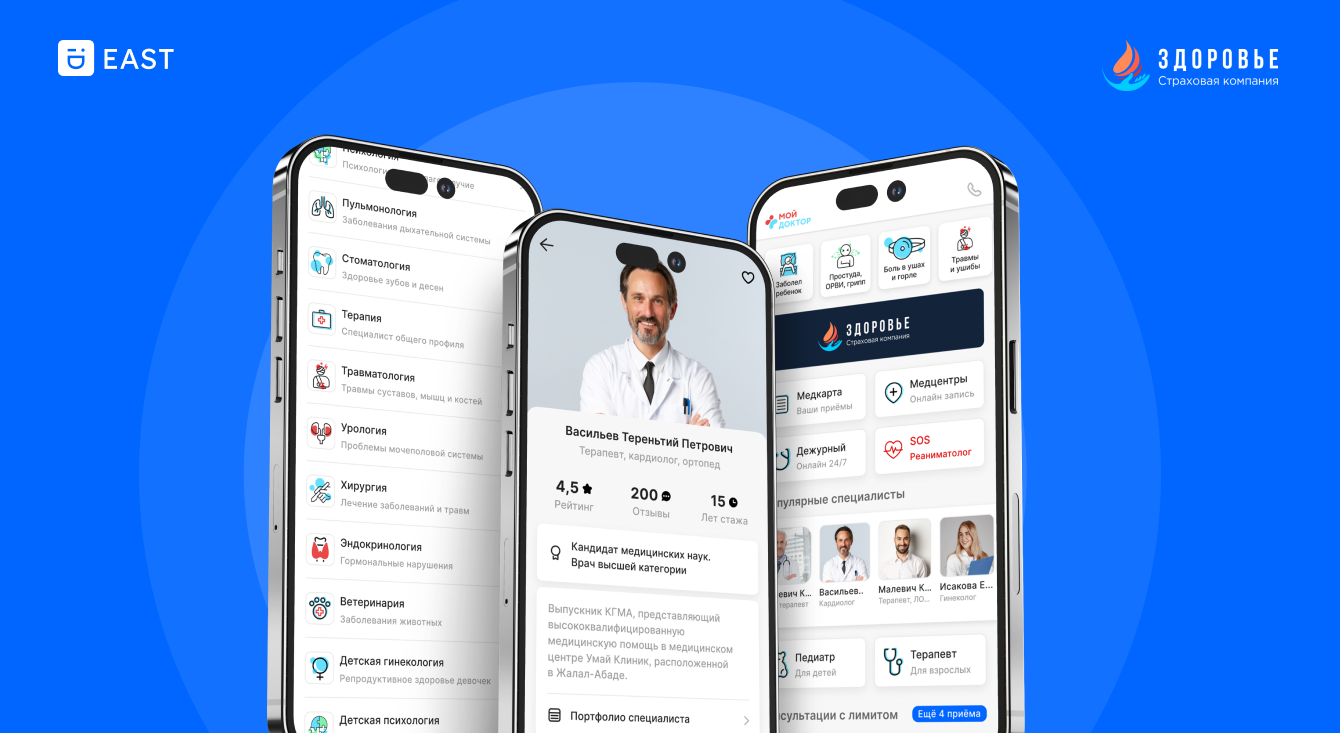
Country
Kyrgyzstan
Coverage
National
Nb of implementation sites
1
Lead organization
Implementation partners
Health Focus Area
All
Services
Telehealth
Electronic medical record
Digital therapeutics
Enabling technologies
Internet of Things
Phone
Software
Standards
Mobile access to medical records
BPPC - Basic Patient Privacy Consents
Management of mobile communication alerts
ATNA - Audit Trail and Node Authentication
Tools
Funding sources
Private funds
Business model
Usage fee / pay per use
Funders
N/A
Summary
My Doctor is a national telemedicine platform launched in 2022, offering 24/7 access to licensed physicians across the Kyrgyz Republic, particularly benefiting those in rural and remote areas. Through its mobile app, users can find doctors, access text or video consultations, upload test results, receive prescriptions, and manage family health from one account. Currently, the platform has about 110,000 active users and connects them with over 200 doctors from various specialties, primarily serving patients outside major cities. By providing continuous doctor availability and prompt responses to urgent requests, My Doctor addresses the shortage of specialists in these regions and minimizes the need for long-distance travel and lengthy waiting times. It is one of the first fully Kyrgyz telemedicine platforms with nationwide reach, collaborating with insurers and employers to enhance the affordability of remote care.
Future goals for My Doctor include increasing annual remote consultations from 10,000 to 30,000 by 2026, with a focus on 60% of these consultations coming from rural areas. The platform aims to grow to 500,000 active users, ensuring 90% of consultations are documented within the app. To maintain service quality, it plans to keep 24/7 doctor coverage and achieve a median response time of under 5 minutes for urgent cases by 2025. Additionally, it seeks to strengthen financial sustainability by increasing the proportion of insurance- and employer-covered consultations to 40% by 2027. The target demographic encompasses the general population.
Keywords
Health for all
Remote teleconsultation
Innovation
Mobile application
Telehealth
Publications
Insights - Lessons learnt
Challenges
From the outset, My Doctor has faced typical process-related challenges for a new digital health service. Telemedicine is still a relatively new concept in the country, so both patients and doctors have needed time and support to adapt to remote consultations as a normal part of care. Some clinicians were initially cautious about changing their workflows and about making decisions without a physical examination.
Technical and contextual challenges include variable internet connectivity in some rural areas and the need to ensure acceptable performance on low-end smartphones, as well as adapting to a still-evolving regulatory environment for telemedicine and digital health.
Internet access
Policy, regulatory and compliance barriers
System integration and workflow adaptation
Recommendations
Continuous onboarding, clear clinical scenarios where teleconsultation is appropriate, and involving early adopter doctors as champions have been crucial to building trust. On the patient side, it has been important to explain what telemedicine can and cannot do, and why in some cases an in-person visit or tests are still necessary. A specific design and process challenge has been to keep all clinical communication inside the platform rather than drifting into informal channels such as messaging apps. While it is often tempting for both doctors and patients to switch to familiar tools like WhatsApp, the project made a deliberate decision to avoid this in order to preserve data security, proper documentation and quality control. This required simplifying and optimising the user experience in the My Doctor app so that consultations are as easy as chatting in a messenger, but remain structured, traceable and compliant with medical and data-protection requirements. At the same time, several factors have positively influenced implementation: growing smartphone penetration, increasing familiarity of the population with digital services, and the interest of insurers and employers in using telemedicine to improve access to care and reduce costs. Clinics are involved mainly as referral destinations rather than core financial or technical partners, which allows the platform to remain relatively independent and flexible. Based on this experience, key recommendations and emerging best practices include: (1) invest early in user-centred design so that both patients and doctors find the platform as simple as a messenger but more reliable and safe; (2) make a clear strategic decision to keep consultations within the platform, and align all training, product design and support processes around that; (3) build a diversified sustainability model that combines direct-to-consumer services with partnerships with insurers and employers; and (4) plan for interoperability with national digital health systems and regulations so that telemedicine can be scaled and integrated into routine care rather than remaining a parallel service.
Recommendations
Projects using similar services
Projects focusing on similar topics
Projects with similar insights
iDHA (Project ID)
sacat7
Project links
https://mydoctor.kg/Origin of information
Project stakeholder
Data source link
N/AAdded to the platform on
2025-11-19
Project editors
Last update by
Albina Salbaeva on 2025-11-26
Number of views
176
WHO classifications

