


Prepare for a Better Tomorrow ('Teguro Ejo Heza')
Origin language: English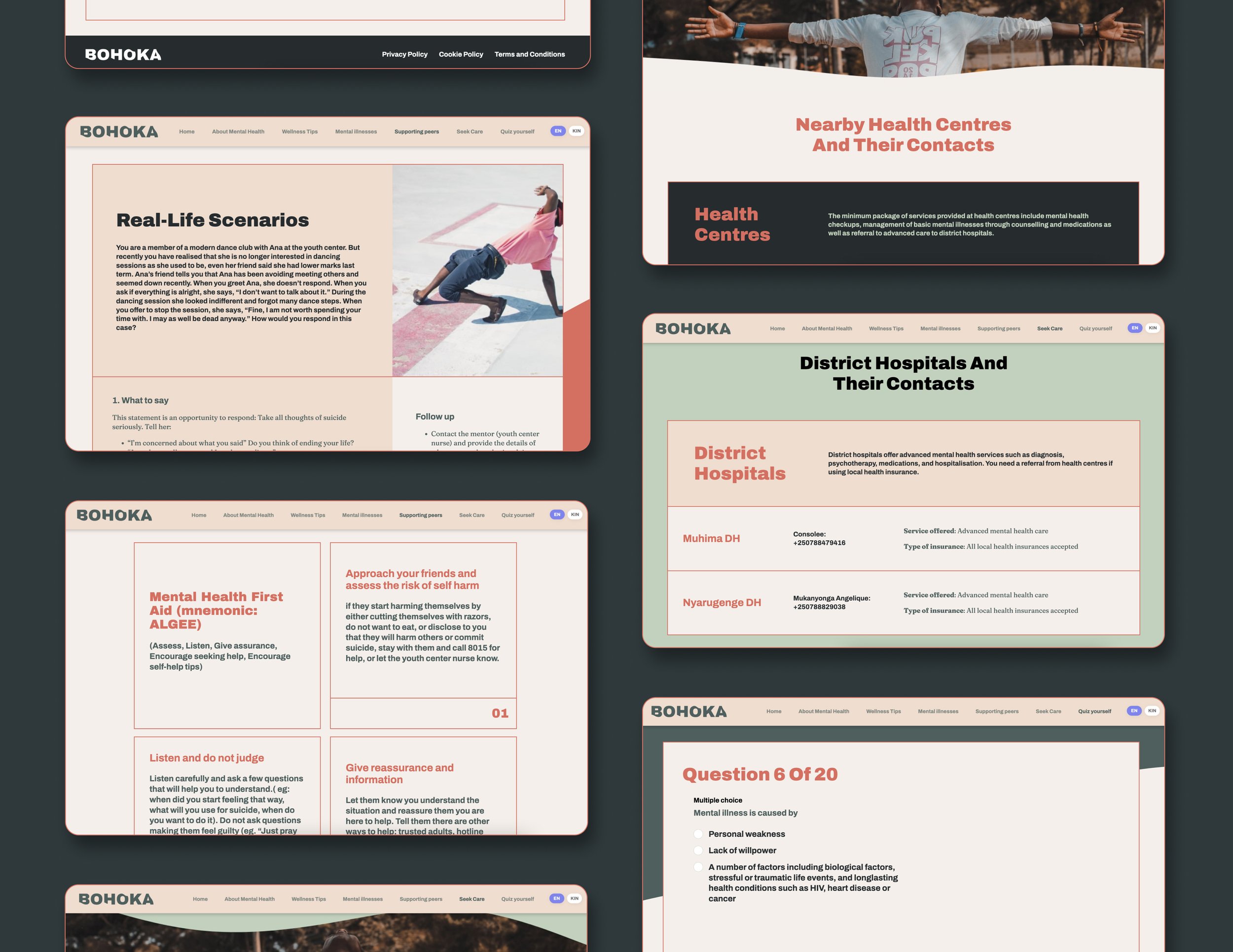
Country
Rwanda
Coverage
National
Nb of implementation sites
1
Lead organization
Implementation partners
Health Focus Area
Mental health
Services
Learning and training
Telehealth
Enabling technologies
Phone
Standards
N/A
Tools
N/A
Funding sources
Donors
Business model
Others
Funders
Summary
Tegura Ejo Heza (TEH), is the first youth-driven digital mental health initiative designed to improve mental health literacy, psychosocial support, and access to care for Rwandan youth aged 10-19 in a post-genocide context. TEH combines Bohoka ("free yourself"), a digital learning and peer-support platform, with Turi Kumwe (“we are together”), an offline peer support program, to provide culturally relevant mental health resources, peer-led workshops, and service linkages. Bohoka uses a chatbot to offer interactive mental health education, self-assessment quizzes, wellness tips, and direct referral pathways to trained health workers. Through Turi Kumwe, young volunteers aged 15-23 (‘Wellness Warriors’) were trained to facilitate mental health education, group discussions, and peer support sessions, fostering safe spaces for open conversations and stigma reduction. Addressing low mental health literacy, stigma, and limited access to services, TEH has already reached 2,000+ youth in two urban youth centers and is now scaling to reach 140,000 youth (2024-2027) through schools, youth centers, and digital outreach.
Keywords
Mental health
Child health
Digital health solutions
Publications
Insights - Lessons learnt
Challenges
1) Engagement & Relevance Challenge: Building trust around mental health remained a significant barrier due to stigma and cultural norms. Many young people hesitated to seek care given high levels of stigma in a post-genocide context; 2) Accessibility Challenge: Limited internet access and device availability meant that solely digital solutions were not viable. 3) Usability Challenge, Low Digital & Mental Health Literacy : The target population had low levels of digital and mental health literacy as well as limited reading/writing skills.
Recommendations
1) Co-Design with Young People Improves Engagement & Relevance: Engaging youth in the design, testing, and implementation of TEH ensured that the platform was culturally relevant, youth-friendly, and responsive to their needs. For example, TEH addressed the misconception that poor mental health is not real unless visible by incorporating content on early signs and symptoms of mental health conditions; 2) Using Diverse Delivery Channels Enhances Accessibility Challenge: TEH had to combine online content (Bohoka) with offline methods (Turi Kumwe workshops, printed flyers, and in-person facilitation) to ensure accessibility for all users. A dual approach (digital & in-person) increased accessibility for youth in low-connectivity settings. Tablets were strategically placed in youth centers, and peer facilitators (Wellness Warriors) delivered workshops using both online and offline materials, ensuring that mental health education reached youth despite digital barriers; 3) Designing for Low Digital & Mental Health Literacy Increases Usability Challenge: TEH was designed with minimal text inputs, pre-generated prompts, and visual content, making it easy to use even for those with low literacy levels. All content was translated into Kinyarwanda by native speakers to ensure cultural and linguistic accuracy.
Recommendations
Projects using similar services
Projects focusing on similar topics
Projects with similar insights
iDHA (Project ID)
z8t3l4
Project links
https://www.ylabsglobal.org/work/all/tegura-ejo-hezaOrigin of information
Website
Data source link
https://www.ylabsglobal.org/work/all/tegura-ejo-hezaAdded to the platform on
2025-02-14
Project editors
Last update by
Sophie Delaigue on 2025-02-14
Number of views
343
WHO classifications

