


Fetosense: AI based fetal & maternal monitoring for LMICs
Origin language: English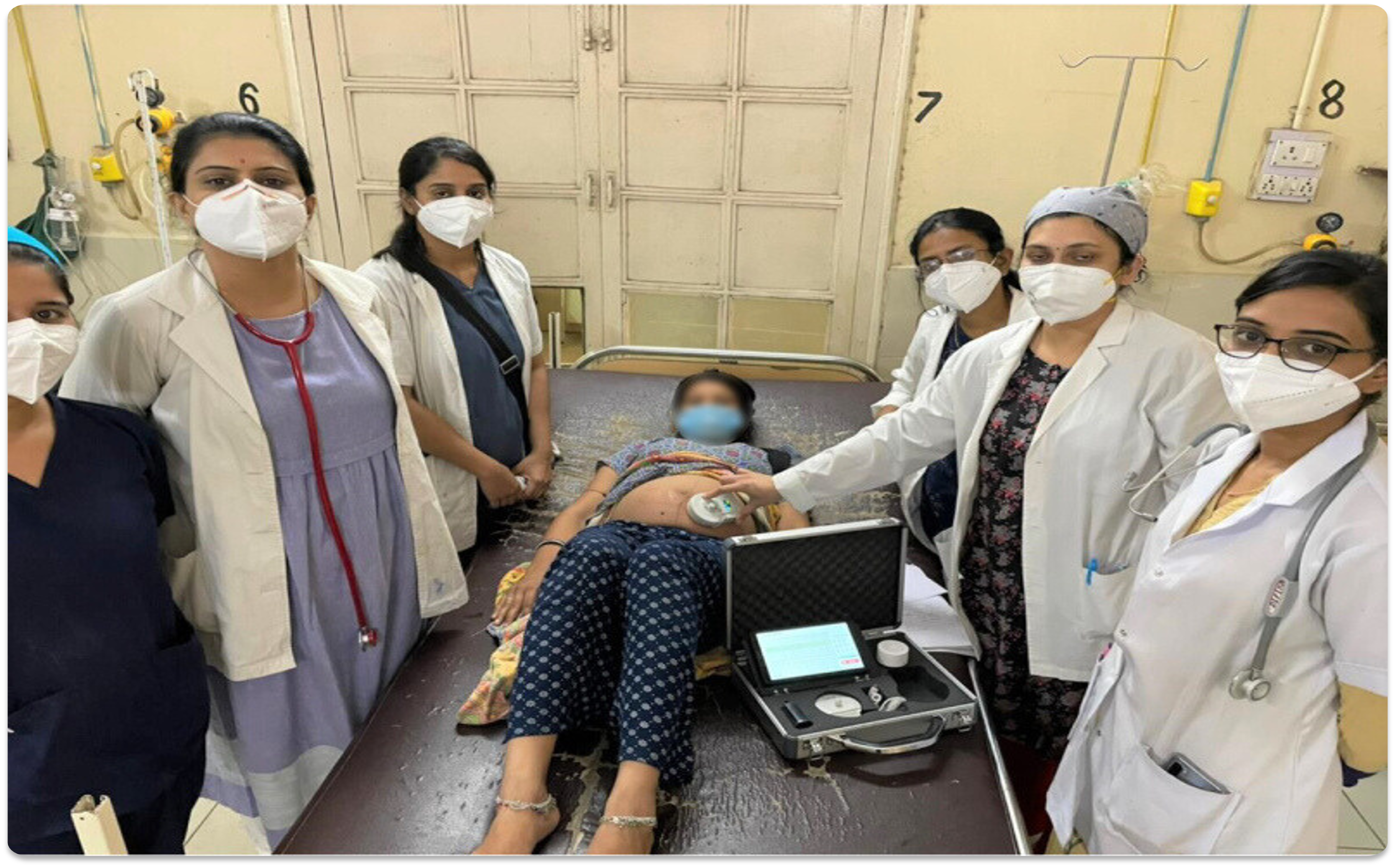
Country
Nigeria
India
Rwanda
Nepal
Tanzania
Thailand
Coverage
International
Nb of implementation sites
1500
Lead organization
Implementation partners
Grand Challenges Canada (GCC)
Saving Lives at Birth Grand Challenges Canada
Pierre Fabre Foundation
United Nations Children's Fund
UNICEF
Zanzibar Government
Zanzibar moh
Govt of India
Government of India
department of health and family welfare India
USAID India
Indian Council of Medical Research
MIT D-Lab
QCT
Botnar Foundation
Comic Relief
KEM
State Government of 5 Indian States
Indian Institute of Technology Bombay
Cloudnine India
Tata India
Health Focus Area
Maternal and child health
Services
Diagnostics
Predictive health and early diagnosis
Health Management Information Systems (HMIS)
Telehealth
Enabling technologies
Artificial Intelligence
Software
Phone
Edge Computing
Internet of Things
Standards
Excel
Management of mobile communication alerts
HL7 FHIR
Mobile access to medical records
Other
Tools
Funding sources
Research grants
Government funds
Private funds
Business model
Others
Funders
Summary
In India, the infant mortality rate (IMR) stands at 28 per 1,000 live births, with prematurity and undiagnosed conditions causing 60% of fetal deaths. To address this, CareNX Innovations has developed Fetosense, an AI-powered monitoring solution for fetal and maternal health that identifies and stratifies pregnancy risks during both antenatal and intrapartum phases. This compact, battery-free device allows for remote monitoring using smartphones, making it ideal for low-resource settings like primary health centers and sub-centers. It aids in the detection of fetal distress, asphyxia, and preterm births, thereby enabling timely referrals.
Fetosense has been implemented in over 1,500 healthcare facilities and more than 300 government hospitals across India, Nepal, Thailand, Tanzania, Nigeria, and Rwanda. The solution has successfully identified high-risk pregnancies early, enhancing maternal care for over 1 million pregnancies to date. Fetosense is a patented, wireless, portable monitor that requires no consumables or specialized expertise for field operation. Its goals include improving access to monitoring, early detection of high-risk cases, risk stratification, and reducing mortality and morbidity. The target population includes healthcare professionals, pregnant women, and the general population, with a focus on maternal and child health.
Keywords
Fetal Health
Fetal heart monitoring
Monitoring pregnant women
Publications
Clinical Validation of Mobile Cardiotocograph Device for Intrapartum and Antepartum Monitoring Compared to Standard Cardiotocograph: An Inter-Rater Agreement Study1D-CNN: Classification of Normal Delivery and Cesarean Section Types Using Cardiotocography Time-Series SignalsODESS / Fondation Pierre Fabre Survey Report (2023)Overcoming Challenges of in Person Prenatal Care: A Pilot Study on the Usability and Acceptability of a Remote Monitoring Device for Pregnant Women in IndiaInsights - Lessons learnt
Challenges
Key Challenges – Fetosense
- Adoption & training: Mixed attitudes to digital tools; ~33% of frontline workers view them negatively. Inadequate training (90.5% reported this) and technical difficulties hinder effective use.
- Fragmented government adoption: Health is state-run in India, requiring separate negotiations with 28 states. Maharashtra integrated Fetosense, but Gujarat required 19 meetings without final agreement—slow, resource-intensive policy scaling.
- AI validation with limited data: Developing accurate AI models using constrained local datasets and building localized clinical datasets across geographies remain core technical obstacles.
- Connectivity & infrastructure: Poor rural network connectivity and frequent technical glitches undermine cloud-based monitoring, data transmission, and device calibration/maintenance.
- Workforce & literacy gaps: Severe shortage of obstetricians/CTG expertise in rural areas; multi-lingual manuals and varying digital literacy add complexity. Overburdened facilities may see digital tools as increasing workload.
- Hardware scaling: Maintaining consistent quality and affordability while scaling production for low-resource settings.
Stakeholder engagement and alignment
Digital literacy
Internet access
Interoperability and integration
Operational cost and maintenance
Stakeholder coordination and collaboration
Recommendations
Key Best Practices – Fetosense
- Clinician-led, user-centric design: Developed with gynecologist guidance and iterated using field feedback from GPs/partners; evolved into a portable AI platform empowering non-specialists. Emphasize empathy, training, and local partnerships to drive adoption.
- Policy alignment: Aligned with PMSMA and integrated into Maharashtra’s NHM PIP (FY2022-23), creating a public-sector deployment pathway.
- Regulatory readiness: Achieved ISO 13485:2016, IEC 60601-1, CDSCO license, and HL7/HIPAA compliance, building trust and interoperability.
- Task-shifting design: Portable, wireless, battery-operated device requiring no consumables/special expertise; enables frontline workers/nurses to perform NSTs.
- AI decision support: Auto-interpretation and real-time alerts support timely clinical action where specialists are scarce.
- Scalable sustainability: B2B/B2G model with device sales plus software subscriptions/service contracts; open-source AI and modular hardware versions. Proven scale: >1 million pregnancies monitored in India, deployments in 6 countries; reported 52% increase in distress detection and 33% reduction in preterm cases. Strategic partnerships (UNICEF, MIT Solve) support growth.
Recommendations
Projects using similar services
Projects focusing on similar topics
Projects with similar insights
iDHA (Project ID)
i2jv1u
Project links
https://www.fetosense.comOrigin of information
Registry
Data source link
https://www.odess.io/projets-e-sante/initiatives/Added to the platform on
2025-01-09
Project editors
Last update by
Aditya Kulkarni on 2026-10-23
Number of views
380
WHO classifications

