


ATI-MEDiTOP — Integrated Hospital Management System
Origin language: English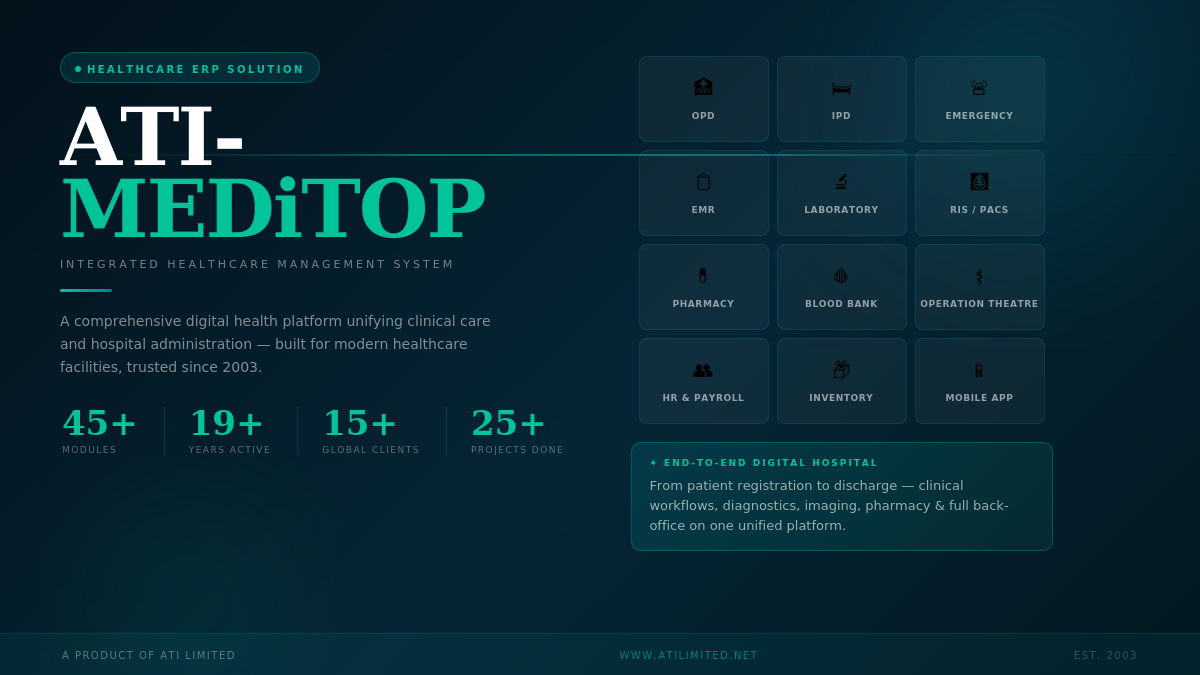
Process & People: Hospital staff resistance to transitioning from paper-based workflows to digital systems was a recurring challenge during initial deployments. Varying levels of digital literacy among clinical and administrative staff required customized training programs per facility. Multi-department go-lives demanded careful change management to avoid disruption to ongoing patient care.
Technical: Integrating legacy hospital infrastructure with modern DICOM/PACS imaging systems required custom network architecture design per site. Ensuring uninterrupted system availability in facilities with unstable power and internet connectivity necessitated robust local server configurations and disaster recovery planning.
Regulatory & Contextual: Differences in healthcare regulations, billing structures, and reporting requirements across client countries required ongoing module customization, increasing implementation timelines for international deployments.
Positive Influencing Factors: Strong buy-in from hospital management and department heads significantly accelerated adoption. The system's modular architecture allowed phased rollouts — starting with high-priority clinical modules and progressively adding back-office functions — reducing operational disruption and building staff confidence incrementally.
Recommendations & Best Practices:Begin every deployment with a dedicated stakeholder alignment session involving clinical leads, IT staff, and hospital administration before go-live. Use phased implementation — prioritize OPD, registration, and billing first, then expand to LIS, RIS, and back-office modules. Establish a local super-user champion at each facility to sustain adoption post-deployment. Maintain a tiered SLA support structure (2-hour urgent response) to build trust and minimize resistance during early adoption phases.
Scalability & Sustainability: ATI-MEDiTOP's 45+ modular structure allows hospitals to start with core modules and scale up without re-platforming. The web-based architecture supports both on-premise and cloud deployment, making it adaptable to facilities of varying sizes and budgets. Nineteen years of continuous development and a dedicated help desk ensure long-term sustainability across all active client sites.

