


Scaling up telemedicine in Nepal
Origin language: English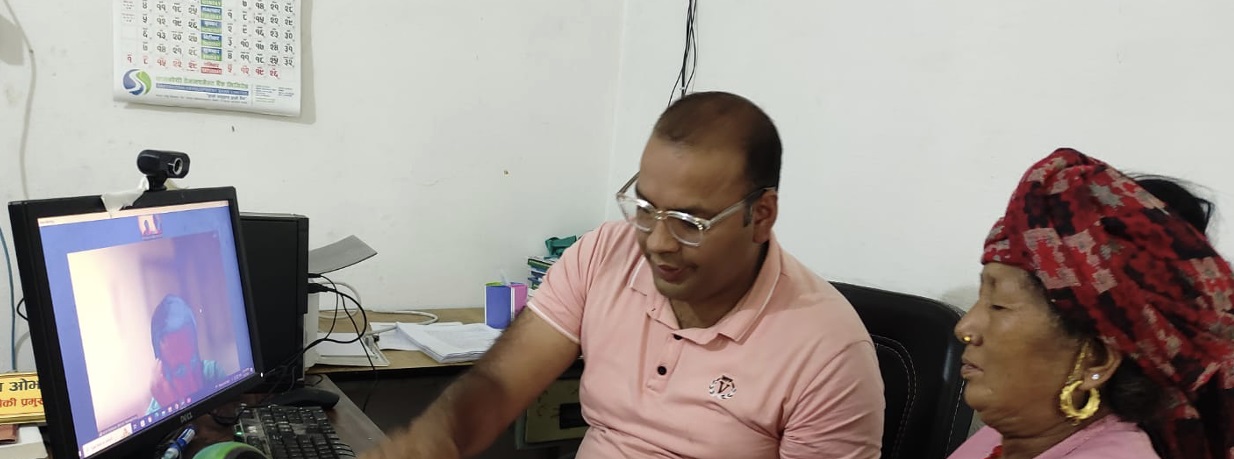
The project builds on a long-standing collaboration between the University Hospital of Geneva (HUG), the University of Geneva (UNIGE), and B.P. Koirala Institute of Health Sciences (BPKIHS). Collaboration in Nepal began in 2014 with tele-education for health professionals, followed in 2015 by telemedicine services in remote health posts in four districts of Koshi Province. Earlier projects showed promising results, including a reduction in patient referrals from 72% to 31% and in costs associated with accessing care and treatment from 29% to 13%. They also highlighted the particularly high use of telemedicine by women, who represented 61% of users.
Building on this experience, a two-year project launched in 2025 aims to evaluate and improve access to healthcare through the large-scale implementation of telemedicine across 100 health facilities, mainly health posts, in Koshi Province.
This represents an unprecedented scale of telemedicine deployment in Nepal.
The project aims to improve access to primary healthcare for underserved and remote populations in Nepal through the large-scale implementation of telemedicine across health facilities in Koshi Province.
The project focuses on underserved rural populations, particularly women and older adults, and covers primary healthcare, sexual and reproductive health, maternal and child health, and skin diseases. Alongside deployment, it includes training of health professionals and Female Community Health Volunteers (FCHVs), community awareness activities, supervision, and engagement with local and national authorities to support sustainability and alignment with Nepal's evolving digital health landscape.
As of September 2026, the project has:
- 102 health facilities equipped for telemedicine
- Conducted 3,620 teleconsultations, around 60% involving women
- Trained 231 Female Community Health Volunteers (FCHVs) to support advocacy
- Established municipal co-financing at 10 sites
The project is ongoing. Further evidence on the implementation process and the impact of telemedicine is expected in the coming months.
- Telemedicine use varies across sites due to differences in local organization, staff availability, and levels of ownership.
- Internet connectivity is unreliable in many rural and mountainous areas, disrupting the regular delivery of teleconsultation services.
- Health workers experience high workloads and limited incentives, leading to reduced motivation to integrate teleconsultation into daily practice.
- Frequent turnover of healthcare staff interrupts service continuity and requires repeated training efforts.
- Provide targeted supportive supervision to facilities facing difficulties, adapting support to their level of experience to stabilize teleconsultation use.
- Strengthen collaboration with local internet providers and explore alternative connectivity options, such as mobile networks or relay points, to improve service continuity.
- Engage municipalities and local leaders to support work organization at facility level and recognize staff engagement through non-financial incentives such as certificates, training opportunities, and institutional visibility.
- Apply a train-the-trainer approach with at least one trained focal person per site, combined with short practical training and follow-up supervision, to limit the impact of staff turnover.

