


Health DHIS2MIS: Nepal's eHMIS DHIS2 Tracker Capture System
Origin language: English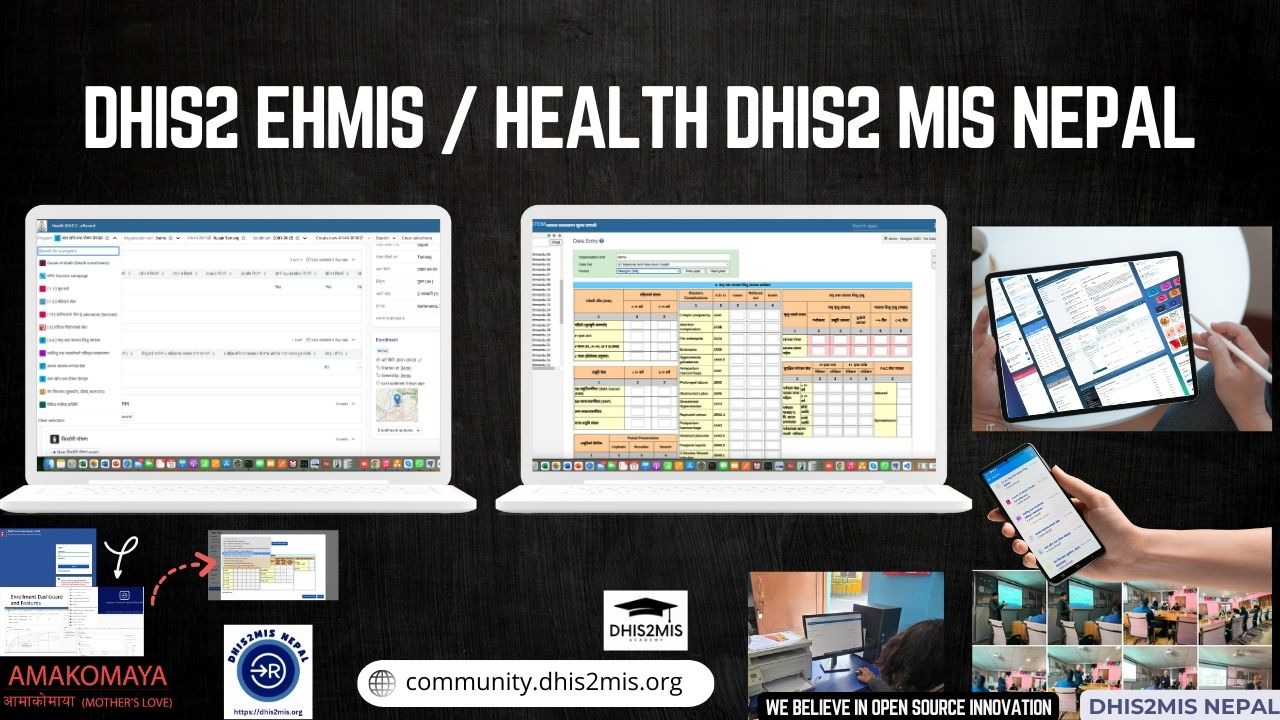
Country
Nepal
Coverage
National
Nb of implementation sites
50
Lead organization
Implementation partners
N/A
Health Focus Area
Maternal and child health
Health promotion
Primary Health Care
Vaccination / Immunization
All
Services
Decision Support
Community-based information systems
Administrative
Learning and training
Health Management Information Systems (HMIS)
Enabling technologies
Artificial Intelligence
Software
Cloud Computing
Big Data Analytics
Standards
ICD-10
HL7 FHIR
SNOMED
JSON
Statistical data and metadata exchange
Tools
N/A
Funding sources
Donors
Government funds
Business model
Data monetization
Freemium
Funders
N/A
Summary
Our project aims to transform health data management through a customized DHIS2 tracker system, enhancing health facilities with real-time insights. This innovation targets underserved communities by improving healthcare accessibility and service quality, as well as informing decision-making. Key benefits include increased health data accuracy and reporting efficiency. By 2026, we focus on various health areas, including primary healthcare, health promotion, vaccination/immunization, and maternal and child health, engaging both health professionals and the general population.
Keywords
Public health
DHA
Digital health solutions
Guided decision making support
Community based care
Publications
Advancements in Health Management Information Systems: A Case Study on DHIS2MIS LinkedIn ProfileInsights - Lessons learnt
Challenges
Process-Related Challenges Resistance to Change Some people were resistant to adopting the new system. Limited Local Expertise Many team members didn't have enough expertise in health informatics or DHIS2, slowing progress.
Coordination Between Multiple Stakeholders Different stakeholders, like the Ministry of Health, NGOs, and academic institutions, sometimes had conflicting goals and timelines.
Technical Challenges Nepali BS Calendar Integration The Nepali BS calendar’s complex structure caused issues with data entry and reporting in DHIS2. The mismatch with the Gregorian calendar affected data accuracy.
System Scalability for Increased Usage The growing amount of data and new features put stress on DHIS2’s current system.
Policy Changes and Regulatory Shifts New laws on health data privacy and digital sharing added complexity.
Contextual Factors Government Support Recent health sector reforms and a push for digitalization made it easier to adopt DHIS2.
Integration with External Data Sources External data sources often had inconsistent formats and required manual cleaning.
Resistance to change
Interoperability and integration
Infrastructure scalability
Policy, regulatory and compliance barriers
Stakeholder coordination and collaboration
Recommendations
Provide early training, workshops, and opportunities for learning from international experts.
Define roles clearly from the start and hold regular meetings to keep everyone aligned. Appoint a liaison to coordinate efforts.
Create solutions for dual-calendar support in DHIS2.
Optimize the database, improve caching, and test the system's ability to handle more data.
Set up automated processes to standardize incoming data, reducing the need for manual intervention.
Align the project with national health policies and digitalization goals to secure ongoing support and funding.
Positive Influences on Implementation The involvement of universities, NGOs, and health departments helped shape the system. Their feedback improved the system's relevance. Best Practice: Keep collaborating with stakeholders throughout the project for better adoption. Adoption of Open-Source Solutions Using open-source tools like DHIS2 offered flexibility, customization, and cost savings. Best Practice: Promote open-source solutions for sustainability in government and healthcare projects. Implications for Scalability and Sustainability Scalability The system can grow to other regions or countries by ensuring core components are standardized and new features, like the Nepali calendar, are modular. Recommendation: Keep scalability in mind so future updates don’t disrupt the system. Sustainability Local involvement and training can reduce dependence on external consultants, ensuring the system lasts long-term. Recommendation: Focus on building local expertise, provide ongoing support, and encourage innovation to meet local needs.
Stay updated on regulations and adapt the system to meet new legal requirements.
Recommendations
Projects using similar services
Projects focusing on similar topics
Projects with similar insights
iDHA (Project ID)
ofjgdw
Project links
https://dhis2mis.orgOrigin of information
Project stakeholder
Data source link
N/AAdded to the platform on
2024-11-11
Project editors
Last update by
Ram Chandra Poudel on 2025-01-18
Number of views
262
WHO classifications

