


Clinelia: Telemedicina Centrada en las Personas
Origin language: Spanish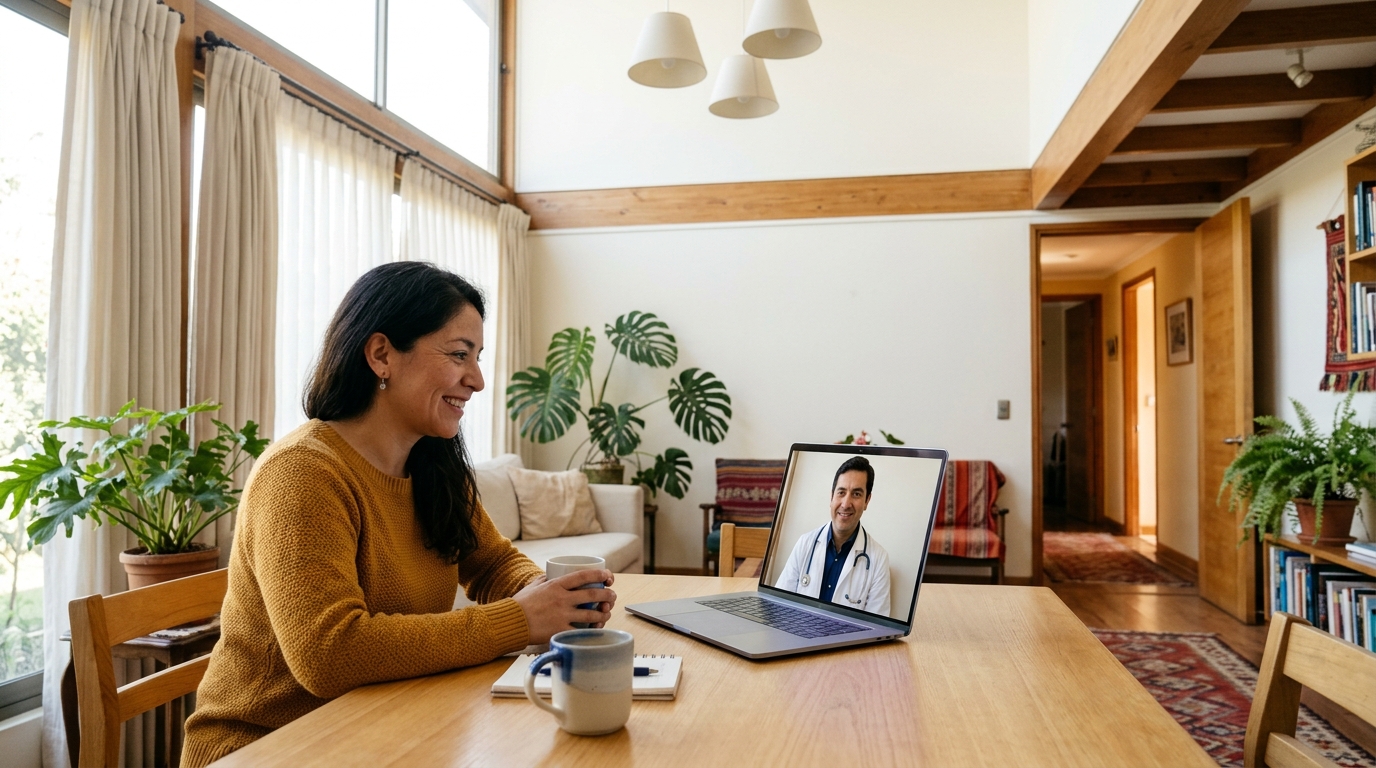
Clinelia (CLINELIA SALUD SpA, D-U-N-S 418009358) is a Chilean telemedicine platform and online health center founded on two guiding principles:: “Time to listen to you. A plan to support you.” and “Continuous care.” Its purpose is to transform the digital health experience in Chile and Latin America, moving beyond episodic and fragmented consultations through care centered on people (aligned with the WHO’s IPCHS framework) that cares both the patient and the health care professional. Clinelia brings together an interprofessional team accredited by the Chilean Superintendency of Health (RNPI) that isconstant growth—including surgeons, medical specialists, clinical psychologists, midwives and nutritionists— who collaborate in an integrated manner using a shared longitudinal Electronic Health Record (EHR) to address each person’s physical, cardiometabolic, reproductive, nutritional, and mental health needs of each individual. To ensure that each consultation includes genuine time for listening and empathy, Clinelia uses ethical and safe that is ethical and secure, which reduces the administrative, documentation, and operational burden on theclinician, thereby reducing professional burnout and allowing them to devote the consultation to look the patient in the eye, understand their context, and support them withstructured post-consultation follow-up. Its infrastructure in Google Cloud Santiago Region (southamerica-west1, 100 % carbon-free energy verified by The Green Web Foundation ID #595) complies with Chilean Laws 20,584, 21,541(Telemedicine), 21,668 (Interoperability), and 21,719 (Data Protection), integratingHL7 FHIR R4 export, ICD-10/ICD-11 coding, a deterministic interceptor forlife-threatening emergencies and suicide risk (100% sensitivity for 131SAMU and *4141 hotline) and AI governance recorded in CSA STAR Level 1 (CCM v4.1 and AI-CAIQ v1.1.0).
The three major challenges facing telemedicine today in Latin America are the dehumanization of the clinical encounter, the fragmentation of interprofessional care,and the risk of using generative AI without specific safeguards. First, the large-scale teleconsultation models typically operate with very short time frames and a high administrative workload in front of the screen, which leads to professional burnout and prevents the clinician from looking the patient in the eye and listen to them carefully. Second, patients who require a multidisciplinary approach by general medicine, medical specialties, clinical psychology, midwifery, and nutrition often receive disjointed care without a shared medical history or longitudinal follow-up. Third, integrating Artificial Intelligence into healthcare under Chilean Law No. 21,719requires avoiding clinical hallucinations, protecting sensitive data (Zero-PII), and detecting local idioms local patterns related to life-threatening emergencies or mental health without relying solely on probabilistic models.
1. People-centered AI to bring a human touch back to theclinical encounter: using Artificial Intelligence under mandatory human supervision (Human-in-the-Loop) to reduce the administrative, documentation, and operational burden both before and following the consultation, freeing up the healthcare professional’s visual and cognitive attention so they can look the patient in the eyes, practice active listening, and prevent burnout. 2. Integrated interprofessional care in a single longitudinal record: coordinating efforts among general practitioners, specialists, clinical psychologists, midwives, and nutritionists on a common and interoperable Electronic Health Record (HL7 FHIR R4, ICD-10/ICD-11), ensuring that the entire team to understand the patient’s comprehensive context and coordinate their treatment planwithout fragmentation. 3. Continuity of care, active follow-up, and equity: replacing episodic consultationswith structured programs for initial assessment and ongoing follow-up, incorporating differentiated feesfor public health insurance (FONASA) enrollees and higher education students,&along with evidence-based open health education. 4. Architecture of deterministic security architecture and audited AI governance: strictly separate the administrative assistant (Elia, 0% access to medical records) from clinical data, applyingautomatic anonymization (Zero-PII) and a deterministic pre-LLM interceptor(validated with 100 % sensitivity and specificity in 500 cases synthetic Chilean cases)—which identifies any life-threatening emergency or suicide crisis to the official 131 SAMU and *4141 networks.

